Read the network.
Change its dynamics.
We combine large-scale electrophysiology, targeted interventions and engineering to investigate healthy and pathological brain activity.
How networks organize information
Our research explores the coordinated activity of neurons and circuits, including oscillations, hippocampal network dynamics, memory and sensory processing. Recording across multiple sites lets us ask how local activity relates to the behaviour of the larger network.
We combine high-density extracellular recording with quantitative analysis to link neural activity across scales.
Timing is part of the intervention
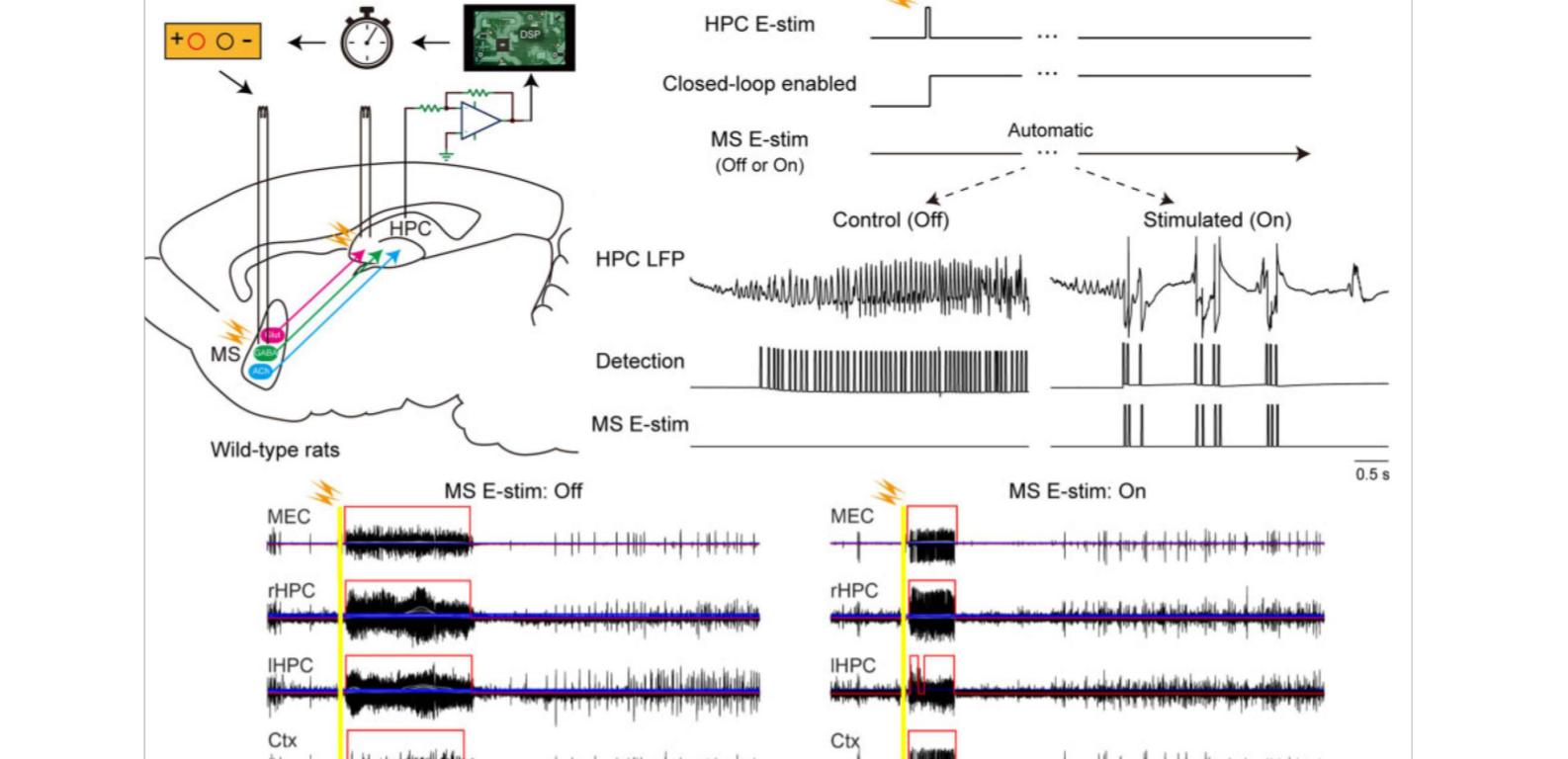
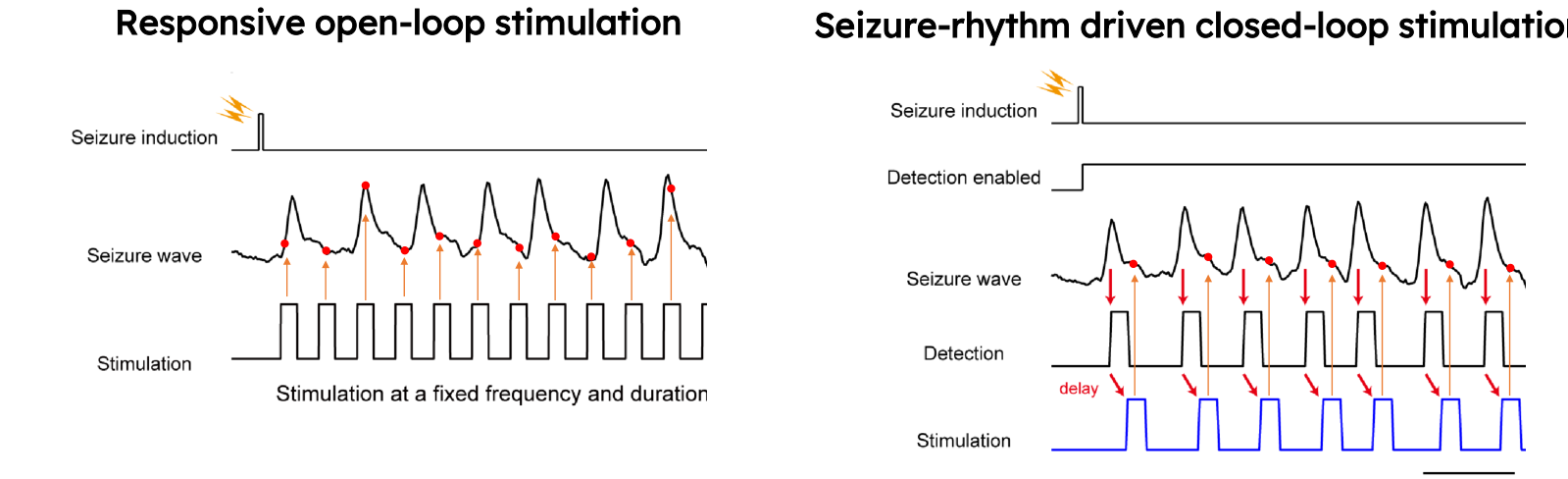
Closed-loop approaches use ongoing neural activity to guide stimulation. We investigate interventions that interact with pathological rhythms, with particular interest in epilepsy and the modulation of circuits relevant to neuropsychiatric conditions.
Our published work includes seizure-rhythm driven medial septal stimulation in rats, phase-targeted stimulation during fear extinction in male rats, and the reinstatement of limbic gamma oscillations in rodent models.
New tools open new questions
We develop approaches for recording neural activity and delivering spatially and temporally targeted stimulation. Our methods include EEG, high-density silicon-probe recordings, optogenetics, intersectional short-pulse stimulation (ISP) and neural data analysis.
The goal is to connect mechanistic questions in experimental models with the challenges of therapeutic translation. Experimental and clinical studies require distinct interpretation; preclinical findings do not establish clinical efficacy.
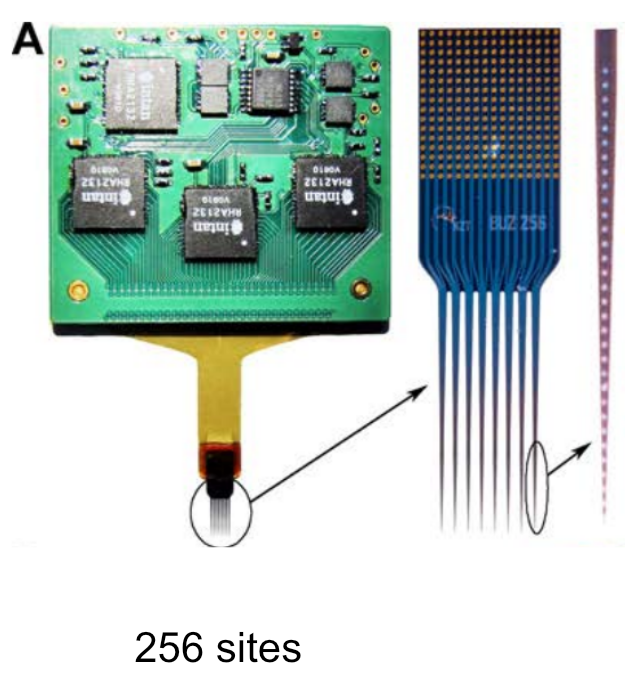
256-channel silicon probes
Large-scale recording with multiplexed headstages.
Berényi et al., 2014 ↗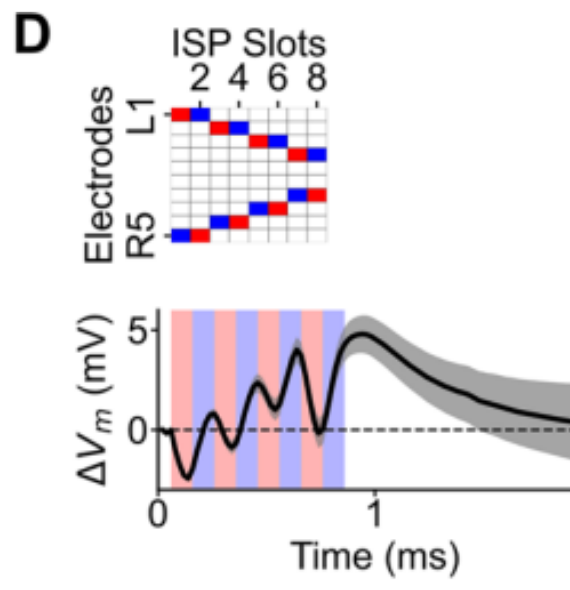
ISP stimulation
Rapidly interleaved pulses and neuronal integration.
Földi et al., 2026 ↗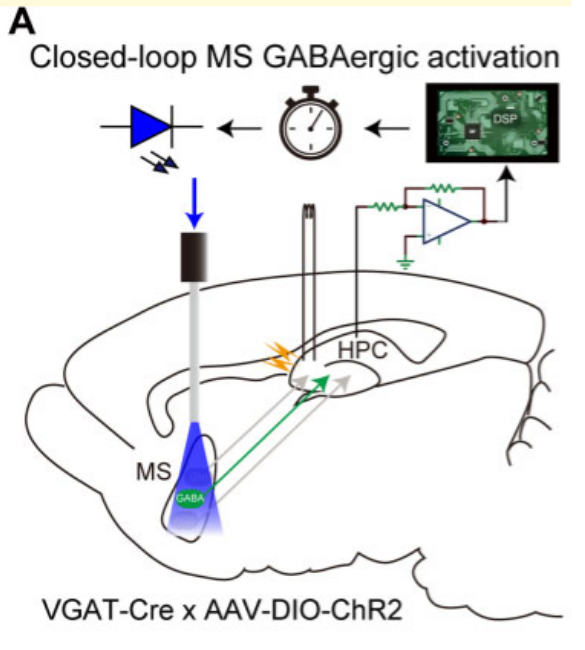
Optogenetics
Cell-type-specific perturbation with feedback control.
Takeuchi et al., 2021 ↗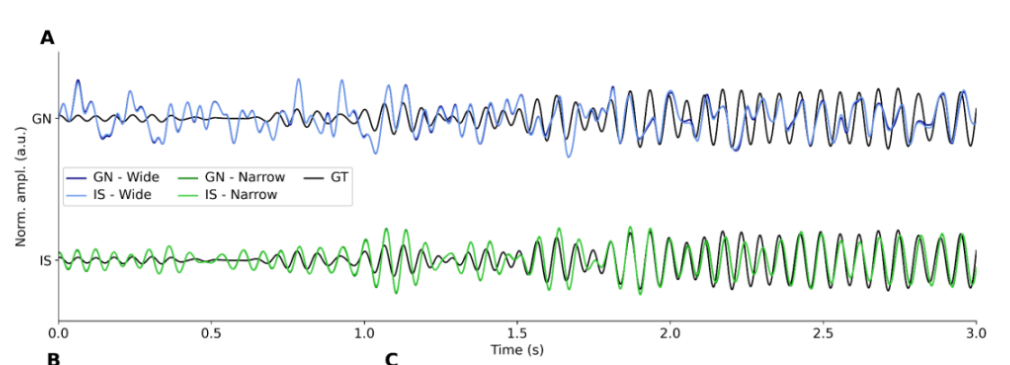
EEG & source timing
Recovering the timing of activity from surface recordings.
Furuglyás et al., 2026 · preprint ↗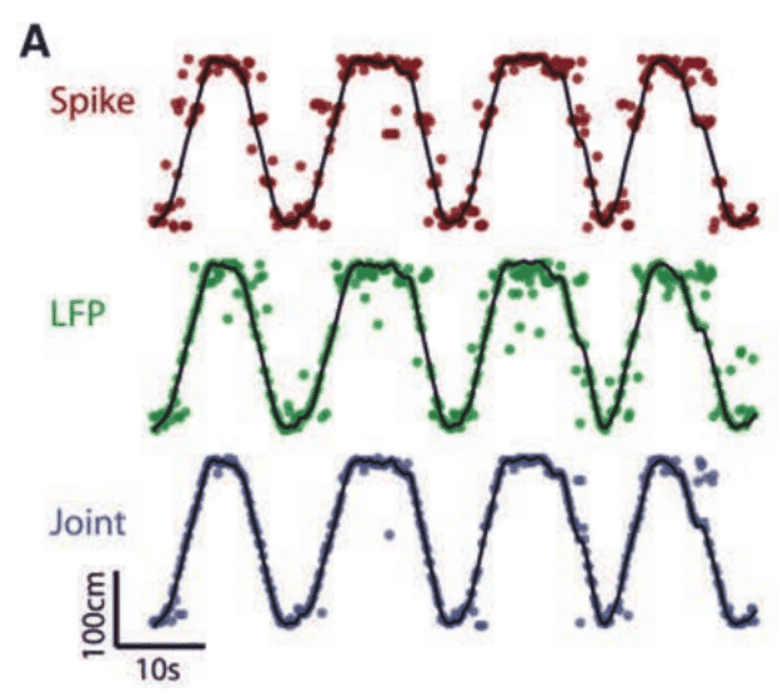
Neural data analysis
Decoding position from spikes and LFPs in a 64-electrode recording.
Agarwal et al., 2014 ↗Examples of recording, stimulation and analysis methods from our research. Source panels retain their original data and colours.
Explore the ISP patent · US11452862B2 ↗Open to collaboration.
We welcome exchanges of ideas, methods and expertise. Please contact us about a specific dataset, analysis tool, research visit or shared project.
Browse the publication archive ↗