BERÉNYI LAB / PEOPLE
Antal BERÉNYI
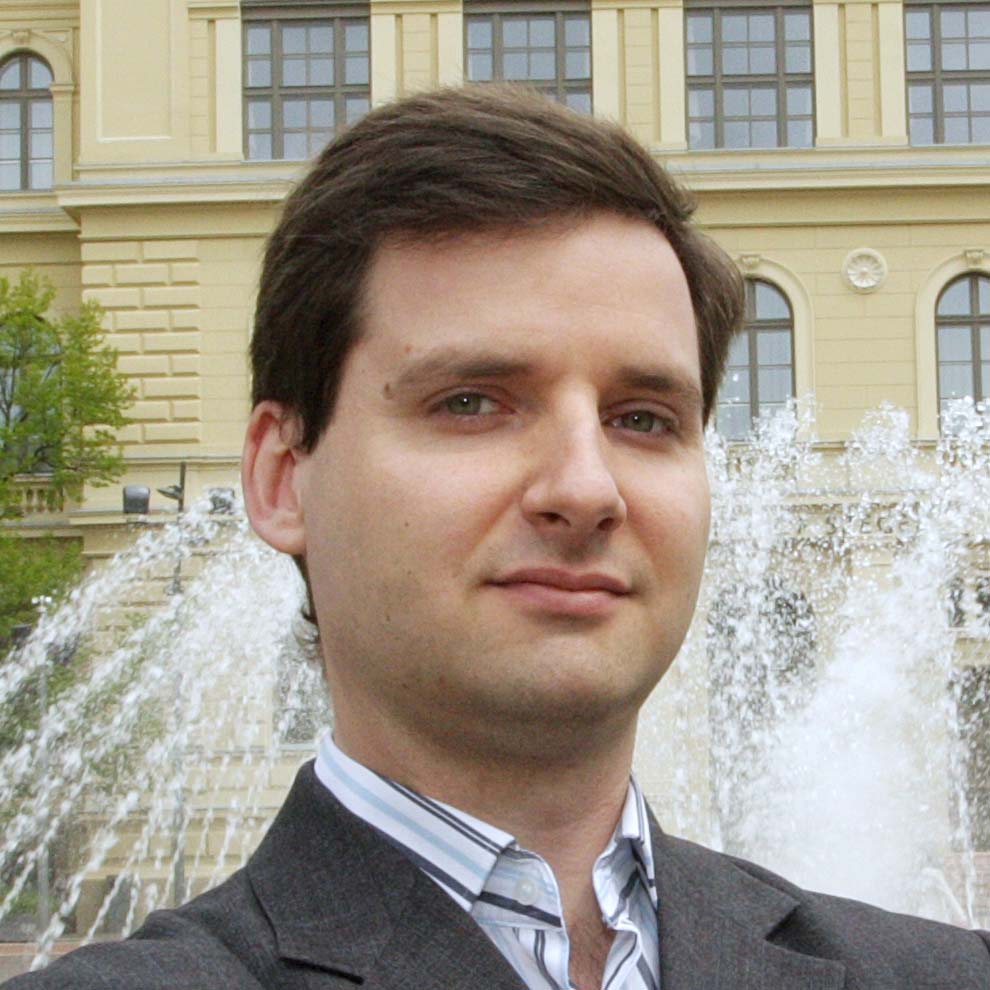
Antal Berényi is a physician–neuroscientist, Chair of the Department of Physiology at the University of Szeged, and Principal Investigator of the Berényi Lab. His work brings together systems neuroscience, clinical research and engineering to understand how neuronal networks generate coordinated activity—and how these dynamics change in neurological and psychiatric disorders.
His research focuses on epilepsy, anxiety and depression, alongside the network mechanisms underlying memory and behaviour. His group combines large-scale electrophysiological recordings, signal analysis and targeted brain stimulation to study neural circuit activity and develop ways to influence pathological network states. A central aim is to translate insights from experimental neuroscience into closed-loop neuromodulation approaches that can be evaluated in clinical settings.
Berényi founded his independent research group in Szeged in 2013, following postdoctoral training with György Buzsáki at Rutgers University and New York University. He held an Adjunct Assistant Professor appointment at NYU Langone Medical Center from 2013 to 2025 and led the HCEMM–University of Szeged Magnetotherapeutics Research Group from 2020 to 2025.
Alongside his academic work, he founded and leads Neunos, which develops minimally invasive, closed-loop brain stimulation systems for drug-resistant epilepsy. His work there spans scientific and technical strategy, multidisciplinary team leadership, and development from laboratory research through preclinical validation and first-in-patient evaluation. He is also the founder and CEO of Amplipex, a developer of high-channel-count electrophysiology recording systems. These activities build on his practical experience in neuroscience, biosignal processing, software and electronic instrumentation.
Education
He earned his MD at the University of Szeged in 2006, followed by a PhD in neuroscience and a qualification in medical economics in 2009, all with distinction.
Selected funding and recognition
His research has received support through an ERC Starting Grant (2013–2018), two Momentum grants from the Hungarian Academy of Sciences (2013–2018 and 2018–2023), the Hungarian Frontline programme (2020–2025), HCEMM funding (2020–2025), and a Hungarian national Excellence Grant (2025–2026). His earlier international training was supported by a Marie Curie International Outgoing Fellowship.
His distinctions include the Junior Prima Prize (2013), the Denis Gabor Prize for Innovation (2016), and the Talentum Prize (2017).